Most taxi operators find out what dispatch software really costs after they’ve signed. Setup fees appear. Hardware costs surface. Minimum contract terms lock you in for two years before you’ve even processed your first booking. By then, switching feels harder than staying.
This article cuts through that. We’ve pulled together real pricing structures for the main taxi dispatch software providers operating in the UK in 2026, explained what each model actually means for your monthly spend, and flagged the hidden costs that rarely appear in the sales pitch.
Whether you’re running 5 vehicles or 50, taxi dispatch software pricing in the UK varies wildly, and the cheapest headline rate is rarely the cheapest option once you add everything up.
Why dispatch software pricing is harder to compare than it looks
Unlike a SaaS tool with a public pricing page, most taxi dispatch software providers quote on request. That alone tells you something. When pricing isn’t published, it’s usually because it’s negotiated, tiered, or bundled with services that inflate the total cost.
The main cost components to watch for across any provider are:
- Per-vehicle monthly fee (the number usually quoted)
- Setup or onboarding fee (sometimes called an “implementation fee”)
- Hardware costs (terminals, tablets, in-car units)
- Minimum vehicle numbers (you may pay for 20 seats even with 12 cars)
- Contract length (12 to 36-month commitments are common)
- Add-on modules (passenger apps, web bookers, AI features priced separately)
- Support tiers (out-of-hours support often costs extra)
When you account for all of these, the difference between providers becomes much sharper. A system advertised at £20 per vehicle per month with a £2,000 setup fee, 12-month contract, and hardware requirement is more expensive over year one than a £25 per vehicle system with no setup, no contract, and no hardware.
1. CAB-X: £15 per vehicle per month, no contract
CAB-X publishes its pricing. That’s already unusual in this market. The headline rate is £15 per vehicle per month, and there’s no setup fee, no hardware requirement, and no minimum contract term. You pay month to month and can leave whenever you want.
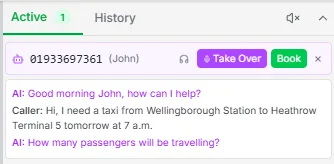
What’s included at that rate matters more than the number itself. The £15 covers access to the dispatch portal, driver app, passenger app, web booker, real-time GPS tracking, automated job allocation, and Voice AI that handles inbound calls and captures bookings automatically. These are sold as add-ons by most other providers.
Setup typically completes within 24 to 48 hours. No hardware is needed because everything runs in the browser or through the driver app on existing smartphones. For a fleet of 15 vehicles, that’s £225 per month all-in, with nothing extra to pay on top.
The CAB-X taxi dispatch software is built by people who have actually run taxi companies, which shows in how the dispatch workflow is laid out. There’s no learning curve that costs you a week of chaos after switching.
Martyn Howe, Director of Phoenix Private Hire Ltd, put it plainly: “We switched to CAB-X in February. It was the best decision I have made in 25 years in the industry.”
2. iCabbi: enterprise pricing, contract required
iCabbi is one of the larger names in UK taxi dispatch software. It’s used by some of the biggest operators in the country, and the product reflects that. The feature set is deep, the reporting tools are extensive, and the platform has been around long enough to have a track record.
Pricing is not published. You request a demo, get assigned a sales contact, and receive a quote based on fleet size and the modules you need. From operator accounts and industry discussion boards, monthly fees generally sit between £30 and £60 per vehicle depending on fleet size and contract terms. Setup costs vary but are rarely zero, and contracts typically run 12 to 24 months.
The passenger app and web booker are available but may be priced separately depending on how your contract is structured. Hardware is sometimes required for in-car dispatch units.
For large operators with complex needs and dedicated operations staff, iCabbi can justify its cost. For smaller independents or operators who want flexibility, the contract structure and pricing opacity are real friction points. Many operators switching away from iCabbi cite exactly these issues. If you’re considering that switch, the CAB-X vs iCabbi comparison is worth reading before your next renewal conversation.
3. Autocab: acquired by Uber, pricing reflects enterprise focus
Autocab was acquired by Uber in 2021, which changed its trajectory significantly. It now has tighter integration with the Uber network, which is useful if you want to receive Uber overflow jobs. Whether that’s valuable depends entirely on your business model.
Pricing is negotiated directly and not published. Operator reports suggest monthly costs are comparable to iCabbi, with the same structure of setup fees, minimum terms, and modular add-ons. The system requires proprietary in-car hardware in many configurations, which adds to the upfront cost.
The platform is well-established, and for operators who want Uber network access alongside their own bookings, it offers something others don’t. But operators who don’t want or need that relationship often find the system’s complexity and cost hard to justify.
If you’re currently on Autocab and questioning whether it still fits, the CAB-X vs Autocab breakdown covers the key differences in both features and pricing structure.
4. TaxiCaller: mid-market pricing, internationally focused
TaxiCaller is a Swedish-built system used across multiple countries. It’s positioned in the mid-market and does publish pricing on its website, which puts it ahead of iCabbi and Autocab for transparency.
Plans start at around $49 per month for a small number of vehicles and scale upward depending on fleet size and features. In GBP terms, UK operators are looking at roughly £40 to £80+ per month for small fleets, though exchange rate fluctuations affect this. The base plan includes core dispatch features, but passenger apps, branded booking tools, and some integrations come at higher tiers.
TaxiCaller doesn’t require proprietary hardware and can be set up without long onboarding. Its support quality gets mixed reviews from UK operators, partly because the team is not UK-based and time zone alignment isn’t always ideal.
For UK-specific needs, including UK licensing compliance features and local support, TaxiCaller is a reasonable mid-market choice but not always the most cost-effective. Our CAB-X vs TaxiCaller comparison looks at where the differences matter most for UK private hire operators.
5. Cordic: legacy system, hardware-dependent
Cordic has been in the UK taxi software market for a long time. It’s a legacy system that has historically required proprietary hardware, including in-car MDTs (mobile data terminals), which adds significant upfront cost. Hardware costs for an MDT setup can run into hundreds of pounds per vehicle.
Pricing is not publicly available and is quoted per operator. Monthly software fees are generally in the mid-to-high range, and the older architecture means the system doesn’t always integrate cleanly with modern smartphone-based driver apps.
Operators on Cordic who are looking to modernise their fleet often move to cloud-based systems specifically to eliminate the hardware dependency. The cost saving from removing MDT hardware alone can offset a year or more of software fees on a modern platform.
6. Other providers: regional systems and newer entrants
Beyond the main players, there are regional dispatch software companies and newer entrants that sometimes offer competitive pricing for smaller fleets. Prices in this segment range widely, from under £10 per vehicle per month to comparable with mid-market options.
The risk with smaller providers is less about price and more about reliability. Uptime guarantees, support availability, and long-term viability as a business matter enormously when your dispatch system is the operational backbone of a taxi company. A platform that goes down on a Friday night with no one answering the phone is a serious problem regardless of what it costs.
When evaluating any newer entrant, ask specifically about uptime guarantees, UK-based support, and how long they’ve been processing live bookings. CAB-X, for context, has processed over 500,000 bookings with 99.99% uptime and has a 24/7 UK-based support team.
The real cost of staying on an expensive legacy system
Operators often underestimate the indirect costs of staying on an older, more expensive system. These don’t appear on an invoice but they affect profitability directly.
- Missed bookings because calls go unanswered during busy periods
- Dispatcher time spent on manual allocation that automated systems handle in seconds
- Driver frustration with clunky apps leading to higher turnover
- Passenger experience problems from slow booking confirmation or no tracking
- IT admin time managing hardware, updates, and compatibility issues
Voice AI is a good example of how this plays out in real money. A dispatch system with built-in Voice AI can answer every inbound call, take the booking, and push it to dispatch without a human touching it. That reduces staffing costs during peak hours and captures bookings that would otherwise be missed when lines are busy. If you’re not sure how that works in practice, the article on AI taxi booking systems explains the mechanics clearly.
When you factor in these operational costs, a £15 per vehicle system that handles Voice AI, automated dispatch, and driver compliance tracking is doing work that would cost significantly more to replicate with manual processes on a cheaper but less capable system.
What to look for beyond the per-vehicle rate
If you’re comparing taxi dispatch software pricing in the UK, these are the questions worth asking every provider:
- Is there a setup or onboarding fee? If so, how much?
- Is there a minimum contract length? What are the exit terms?
- Does the quoted price include the passenger app and web booker, or are those add-ons?
- Is there a minimum vehicle number I’m billed for, regardless of my actual fleet size?
- Does it require proprietary hardware, and what does that cost?
- What’s included in support? Is out-of-hours support available, and at what cost?
- Are there any per-booking fees or transaction charges?
- How long does setup realistically take?
A provider that can answer all of these clearly and upfront is typically more trustworthy than one that deflects to a sales call before sharing any numbers.
Pricing summary: side-by-side comparison
Here’s how the main providers compare across the key pricing factors:
- CAB-X: From £15 per vehicle/month. No setup fee. No contract. No hardware. Passenger app, driver app, web booker, and Voice AI included.
- iCabbi: Approximately £30 to £60 per vehicle/month (reported). Setup fees apply. 12 to 24-month contracts. Some modules priced separately.
- Autocab: Negotiated pricing. Setup fees apply. Hardware often required. Minimum contract terms. Uber integration available.
- TaxiCaller: From approximately £40+ per month for small fleets (USD pricing converted). No long contracts in base plans. UK support limited.
- Cordic: Negotiated pricing. Hardware (MDT) required in many configurations. Higher upfront cost.
Taxi software cost per vehicle ranges from £15 at the low end to £60 or more at the high end, before hardware and setup fees are added. For a 20-vehicle fleet, that’s the difference between £300 per month and £1,200 per month, or £3,600 versus £14,400 over a year. The math matters.
How to decide which system is right for your fleet
Price is one input, not the whole decision. A cheaper system that misses bookings, frustrates drivers, or goes down regularly will cost you more than it saves. Equally, paying a premium for features your fleet doesn’t use or can’t benefit from is waste.
The right system for most UK taxi and private hire operators is one that covers core dispatch, gives drivers a reliable app, offers passengers a booking option, automates as much routine work as possible, and does all of this without locking you into a long-term commitment you can’t exit if things change.
For smaller and mid-size fleets in particular, the case for flexible, contract-free pricing is strong. The market changes. Regulations shift. Your fleet size fluctuates. A system that charges you for 20 vehicles when you’re running 14 because of a minimum-seat clause is a real financial drain that compounds over time.
If you’re ready to see what current taxi dispatch software pricing actually looks like in practice, get in touch with the CAB-X team and they’ll walk you through the numbers for your specific fleet size. No sales pressure, no hidden costs, and you can be live within 48 hours if you decide to proceed.
Frequently Asked Questions
How much does taxi dispatch software cost per vehicle in the UK?
Taxi dispatch software pricing in the UK ranges from £15 per vehicle per month with CAB-X up to £60 or more with enterprise providers like iCabbi. The per-vehicle rate is only part of the cost. Setup fees, hardware, and contract terms can significantly increase the total spend, especially in the first year.
Do taxi dispatch software providers charge setup fees?
Many do. iCabbi, Autocab, and Cordic all typically charge setup or implementation fees that can run into hundreds or thousands of pounds depending on fleet size. CAB-X charges no setup fee and can have operators live within 24 to 48 hours.
Is there taxi dispatch software with no contract in the UK?
Yes. CAB-X offers month-to-month pricing with no minimum contract term. Most other providers, including iCabbi and Autocab, require 12 to 24-month contracts. If your fleet size or circumstances are likely to change, a no-contract option is worth prioritising.
What is included in the CAB-X monthly price?
The £15 per vehicle per month fee from CAB-X includes the dispatch portal, driver app, passenger app, web booker, real-time GPS tracking, automated job allocation, and Voice AI for handling inbound bookings. These features are sold as add-ons by most other providers.
Why do some taxi software providers not publish their pricing?
Unpublished pricing usually means costs are negotiated per operator, tiered by fleet size, or bundled with services that make direct comparison difficult. Providers with transparent published pricing, like CAB-X, make it easier to calculate your actual monthly spend before committing.