Why taxi corporate accounts dispatch software UK matters more than ever
If you run a taxi fleet in the UK and you’re not chasing corporate accounts, you’re leaving the most reliable revenue stream on the table. Taxi corporate accounts dispatch software UK gives operators the tools to win, manage, and retain business clients, and it changes the economics of your entire operation. Account work isn’t glamorous. But it pays on time (mostly), it fills dead hours, and it compounds month after month.
We’ve watched small operators go from zero account clients to billing £8,000 a month in recurring corporate work within six months. The difference between those who succeed and those who don’t? Almost always, it comes down to systems. Specifically, whether your dispatch software can handle account billing, automated invoicing, credit limits, and driver allocation rules that corporate clients expect.
This guide walks you through the exact steps to win your first corporate account, set up the software to manage it properly, and scale from there.
What corporate account work actually looks like
Let’s get specific. Corporate account work means a business books taxis through your fleet on credit. They don’t pay per ride. You invoice them, usually monthly, sometimes fortnightly. The business might be a hotel sending guests to the airport, a law firm moving staff between offices, an NHS trust transporting patients, or a recruitment agency shuttling temps to warehouse shifts at 5am.
The rides themselves aren’t special. What’s different is the billing relationship. And the expectations around it.
Why operators love it
- Predictable monthly revenue. A single corporate account averaging 15 jobs a week at £12 each is worth roughly £2,300 a month. Get five of those and you’ve built something stable.
- Dead-hour utilisation. Corporate jobs often fall outside peak times. School runs at 3pm. Patient transport at 10am. Airport transfers at 4:30am. These fill gaps your street work doesn’t.
- Lower acquisition cost. One contract negotiation replaces hundreds of individual marketing touches. You sell once and deliver for months or years.
The catch? Corporate clients expect professional invoicing, detailed ride reports, named driver pools, and strict SLA compliance. Try managing that with a spreadsheet and a WhatsApp group. You’ll lose the account inside three months.
How taxi corporate accounts dispatch software UK handles the hard parts

Good dispatch software doesn’t just assign drivers to jobs. For account work, it needs to handle a stack of financial and operational functions that most operators struggle with manually.
Account-level billing and invoicing
Each corporate client gets their own account profile. You set billing cycles (weekly, fortnightly, monthly), payment terms (14 days, 30 days, whatever you negotiate), and VAT treatment. The software generates invoices automatically at the end of each cycle, itemised by date, pickup, destination, and fare. No more spending Sunday afternoon in Excel.
With CAB-X’s dispatch system, you can also assign cost-centre codes per account. So when a hotel has three departments booking taxis, you can split the invoice by department. That kind of detail wins you accounts. Hotels and larger businesses need it for their own internal accounting.
Credit limits and spend caps
Here’s where operators get burned without software. A corporate client racks up £3,000 in rides, then disputes the invoice or goes quiet on payment. Proper dispatch software lets you set credit limits per account. When the account hits £2,500 (or whatever you set), the system flags it. You can block new bookings until they pay, or approve a temporary increase. Your call, but at least you know.
Driver allocation rules
Corporate clients are fussy about drivers. And honestly, they should be. An NHS contract might require DBS-checked drivers only. A law firm might want the same two drivers every time for confidentiality. A hotel might want drivers with specific vehicle types, saloons only, no estate cars with dog hair on the seats.
Software handles this through driver pools and allocation rules. You tag drivers as eligible for specific accounts, and the dispatch system only offers those jobs to the right people. Manual dispatch can’t do this reliably once you’re past about ten corporate jobs a day.
How to win your first corporate account from zero
This is the part most guides skip. Everyone talks about managing accounts, but how do you actually get one when you’ve never had one?
Step 1: pick your target sector
Don’t spray and pray. Pick one type of business. Hotels are the easiest starting point for most operators. They need taxis constantly, they’re used to working with local firms, and the decision-maker (front desk manager or GM) is usually accessible.
Other strong options: recruitment agencies, care homes, dental practices with patients who can’t drive, and small law firms.
Step 2: build a one-page proposal
Not a brochure. A single page with four things on it:
- Your fleet size and licence details (private hire or hackney, council area)
- How booking works for them (phone, app, web booker, email)
- How billing works (monthly invoice, itemised, emailed as PDF)
- Your pricing structure (fixed routes, metered, or a blend)
That’s it. Corporate clients don’t care about your brand story. They care whether you’ll show up on time and invoice them correctly.
If you’re using CAB-X’s web booker, mention it. Businesses love being able to book online through a branded portal without downloading an app. It removes friction from their side completely.
Step 3: offer a two-week trial
Nobody signs a 12-month contract with an unknown taxi firm. Offer two weeks on account, capped at a sensible amount (£500 is reasonable). This lets them test your reliability without risk. If you deliver, the contract conversation happens naturally.
Step 4: set up the account in your software before the first job
Don’t wing it. Before the trial starts, configure the account in your dispatch system. Set the billing terms, assign eligible drivers, create the cost-centre codes if needed, and run a test invoice. Nothing kills a new relationship faster than a messy first invoice.
Compliance requirements you can’t ignore

Corporate transport contracts in the UK come with compliance baggage. Some of it is legal, some is just what clients expect.
- Operator licensing. You need a valid private hire operator licence from the relevant council. Obvious, but some operators try to subcontract without one.
- DBS checks. For NHS, school, and vulnerable adult transport, drivers need enhanced DBS checks. Most councils require these anyway, but corporate clients will ask for proof.
- GDPR. You’re handling passenger names, phone numbers, pickup addresses, sometimes medical information. You need a data processing agreement with the corporate client. Your software provider should store data in UK or EU data centres. Ask them.
- Insurance. Public liability and hire-and-reward cover. Corporate clients (especially NHS and council contracts) will want to see certificates before signing.
If you’re a smaller fleet wondering whether this level of compliance is realistic, it is. We’ve covered how even operators with under 20 vehicles can set up professional systems without a huge overhead.
Manual account management vs software: a real comparison
Let’s be honest about what manual account management looks like. Because plenty of operators still do it.
You get a call from the hotel. You write it in a notebook or a shared Google Sheet. The driver does the job. At the end of the month, someone (usually you, at 11pm) goes through the sheet, totals up the fares, types an invoice in Word, and emails it. The hotel queries three of the twelve jobs because the destinations don’t match their records. You dig through driver texts to find the answers. Two hours gone.
Now multiply that by five accounts.
With dispatch software, every job is logged automatically with timestamps, GPS routes, pickup and drop-off points, and fare calculations. The invoice generates itself. Disputes drop to almost zero because the data is right there. We’ve seen operators save 8-10 hours a month just on invoicing once they move to software-driven account management.
And the cost? CAB-X starts at £15 a month per vehicle. If you’ve got a 10-car fleet, that’s £150 a month. One corporate account covers that in the first week.
Scaling from one account to ten with taxi corporate accounts dispatch software UK
Your first account teaches you the workflow. The second one gets easier. By the fifth, you’ve got a system. Here’s how operators typically scale.
Months 1-2: first account
Focus on flawless delivery. On-time percentage above 95%. Clean invoices. Responsive communication. Nothing fancy, just reliable.
Months 3-4: ask for referrals
Happy corporate clients refer other businesses. A hotel GM talks to other GMs. A care home manager knows the manager down the road. Ask directly. “Do you know anyone else who needs a reliable taxi account?” Simple, but it works.
Months 5-6: target larger contracts
Once you can show a track record (on-time stats, clean invoicing history, driver DBS compliance), you’re credible enough to pitch to NHS trusts, local councils, and larger corporate offices. These contracts are worth £5,000-£15,000 a month. They also come with stricter requirements, but your software and processes can handle it by now.
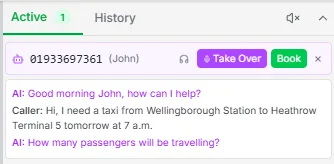
If you’re growing and need to reduce your call centre overhead, automated dispatch becomes critical at this stage. Corporate bookings that come through a web portal or API go straight into the system without anyone answering a phone.
Use cases that work well for UK operators
Not all corporate accounts are equal. Some are more profitable, some are more reliable, some are frankly a headache. Here’s what we’ve seen work.
- Hotel airport transfers. High volume, predictable routes, good margins on fixed-price fares. Hotels near Heathrow, Gatwick, Manchester, and Birmingham airports are gold.
- NHS patient transport. Steady work, government-backed payment, but slower billing cycles (often 45-60 days). You need the cash flow to wait.
- School transport. Term-time only, but very consistent. Requires enhanced DBS and often specific vehicle specs.
- Solicitor and accountancy firms. Lower volume but higher fares. Often want executive vehicles and the same driver each time.
- Recruitment agencies. Early morning and late night runs to industrial estates. High volume, tight margins, but fills hours nobody else wants.
Getting started this week

You don’t need to overhaul your entire operation. Start with one step. Pick a local hotel or business, put together that one-page proposal, and offer a two-week trial. If your current dispatch setup can’t handle account billing, that’s your signal to switch. CAB-X can be running in under 48 hours, and the account management features are built in from day one.
Corporate work won’t replace your street bookings overnight. But six months from now, when you’ve got three or four accounts generating £6,000-£10,000 in predictable monthly revenue, you’ll wonder why you didn’t start sooner. The software exists. The accounts are out there. Go get one.
Frequently Asked Questions
How does taxi dispatch software handle corporate invoicing?
Dispatch software automatically generates itemised invoices at the end of each billing cycle, broken down by date, route, and fare. You set the billing frequency and payment terms per account, and invoices are emailed as PDFs without any manual data entry.
Can small taxi fleets win corporate account work?
Yes. Even operators with 5-10 vehicles can win hotel, care home, and recruitment agency accounts. Corporate clients care about reliability and proper invoicing, not fleet size. The right dispatch software handles the professional billing and reporting they expect.
What compliance is needed for corporate taxi contracts in the UK?
You need a valid private hire operator licence, appropriate insurance, and DBS checks for drivers handling NHS or school transport. GDPR compliance is also required since you’ll be processing passenger personal data on behalf of the corporate client.
How much revenue can one corporate taxi account generate?
A single account averaging 15 jobs per week at £12 each generates roughly £2,300 per month. Larger contracts with NHS trusts or hotel chains can be worth £5,000-£15,000 monthly depending on volume and route distances.
How long does it take to set up corporate account features in dispatch software?
With systems like CAB-X, you can configure a new corporate account in minutes. Setting billing terms, driver pools, credit limits, and cost-centre codes is done through the admin panel. The full dispatch system itself can be operational within 48 hours.